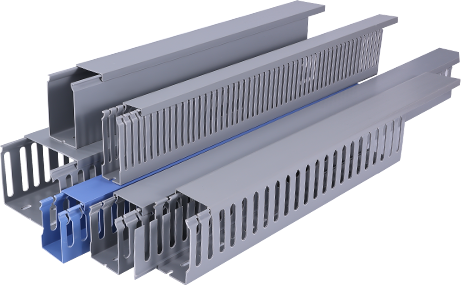
In modern industrial automation systems, industrial control cabinets serve as the nerve center of production lines, housing hundreds of critical electrical components, control modules, and thousands of feet of connecting wires. Among all the components that keep control cabinets organized and functional, wiring duct for industrial control cabinets is one of the most underrated yet essential elements that directly impacts system reliability, maintenance efficiency, and long-term operational safety. Without proper wiring duct installation, tangled wires can lead to troubleshooting delays, accidental short circuits, and costly unplanned downtime, making it critical for industrial engineers and facility managers to understand the role and proper application of this component. This article will break down the core functions of industrial wiring ducts, key selection criteria, and best practices for installation to help teams maximize the performance of their control cabinet systems.
First, it is necessary to clarify the core functions that specialized wiring duct for industrial control cabinets fulfills beyond basic cable organization. The primary function of wiring duct is to segregate different types of wiring to prevent electrical interference: power cables carrying high-voltage current can generate electromagnetic interference that disrupts signal transmission from low-voltage control wires and communication cables, and properly designed wiring ducts create physical separation that minimizes this interference. In addition, wiring ducts protect wires from mechanical damage caused by sharp edges of cabinet frames, accidental contact with moving parts, or exposure to dust, oil, and moisture that are common in industrial environments. This protection extends the service life of wiring and reduces the risk of insulation degradation that can lead to electrical faults. Finally, organized wiring in ducts makes routine maintenance and system upgrades far more efficient: technicians can quickly identify specific cables, trace connections, and replace faulty components without sorting through a chaotic mess of tangled wires, cutting troubleshooting time by up to 50% according to many industrial maintenance teams.
Secondly, selecting the right type of wiring duct for industrial control cabinets requires consideration of multiple environmental and application-specific factors that cannot be overlooked. The most fundamental factor is material selection: most industrial wiring ducts are made of polyvinyl chloride (PVC) or halogen-free polypropylene (PP), with PVC being the most cost-effective option for standard indoor industrial environments with no extreme temperature fluctuations. Halogen-free PP, on the other hand, is ideal for applications with strict fire safety requirements, as it produces less toxic smoke when exposed to high temperatures, making it suitable for control cabinets in public infrastructure, offshore platforms, and food processing facilities. For environments with exposure to corrosive chemicals or extreme temperatures, fiberglass-reinforced wiring ducts offer superior chemical and thermal resistance, though they come with a higher upfront cost. Beyond material, size and design features also matter: the duct width and depth must be selected to leave 20-30% extra space for future system expansions, which avoids overcrowding that can trap heat and damage wires. Finger-style duct with slotted side walls is the most popular choice for control cabinets, as it allows easy access for branching wires to connect to terminal blocks and components while keeping main cable runs neatly contained.
In addition to proper selection, following industry best practices for installation can unlock the full benefits of wiring duct for industrial control cabinets and avoid common operational issues. One common mistake made during installation is overfilling the wiring duct, which not only makes future modifications difficult but also restricts airflow, leading to heat buildup inside the cabinet that can shorten the lifespan of sensitive electronic components. A general rule of thumb is to never fill a duct more than 70% of its total volume, to leave room for heat dissipation and future cable additions. Another best practice is to segregate wiring by type in separate ducts: high-voltage power cables, low-voltage control signals, and communication cables such as Ethernet or Profibus should each be routed through different ducts to minimize cross-interference. For especially sensitive communication signals, using grounded metal wiring ducts can provide additional shielding against electromagnetic interference, ensuring stable data transmission in high-noise industrial environments. It is also important to leave adequate space between the outer edge of the wiring duct and the cabinet door or cooling fans to maintain proper airflow, which helps regulate internal cabinet temperature and prevents overheating of components.
Finally, the long-term value of investing in high-quality wiring duct for industrial control cabinets is often underestimated, but it delivers measurable cost savings over the entire lifecycle of the control system. While high-quality wiring ducts may cost 10-15% more upfront than low-quality generic alternatives, they resist fading, cracking, and brittleness over decades of use, eliminating the need for costly mid-lifecycle replacements that require shutting down production lines to rework entire wiring systems. Well-organized wiring also reduces the risk of unplanned downtime caused by wiring faults, which can cost industrial facilities thousands of dollars per hour in lost production. For teams that regularly upgrade or reconfigure control systems, modular wiring duct systems allow for quick modifications without disrupting the entire cabinet layout, reducing downtime during upgrades and lowering labor costs for maintenance teams.
In conclusion, wiring duct for industrial control cabinets is far more than a simple organizational tool—it is a critical component that supports system reliability, electrical safety, and long-term operational efficiency in industrial automation. By understanding its core functions, selecting the right type for specific application requirements, and following proven installation best practices, industrial teams can avoid common wiring-related issues and reduce total ownership costs of their control systems. Investing in high-quality wiring duct and proper installation is a small step that delivers large, long-term returns for any industrial operation.