Latching relays, also known as bistable relays, are a special type of electromagnetic relay that maintain their switch position even after the controlling power is removed. This unique characteristic sets them apart from traditional relays, which require continuous current to maintain their state. The simplicity and efficiency of latching relays make them an essential component in a variety of applications, particularly in automation systems, energy management, and remote control devices. This article explores the working principle, advantages, and common uses of latching relays in modern electrical circuits.
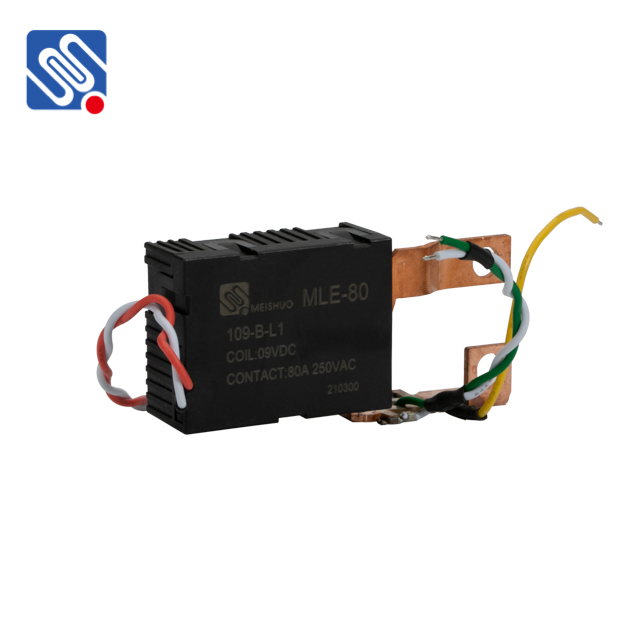
Working Principle of Latching Relays A latching relay consists of two stable states: “set” and “reset.” These states are achieved by sending a control pulse to the relay, which switches it to the opposite state. Unlike conventional relays that need continuous current to stay active, latching relays only require a brief pulse of current to change their position. Once the relay has latched into its new state, no further power is needed to maintain it. To reverse the state, another control pulse is applied, effectively “resetting” the relay. The relay mechanism typically uses a permanent magnet or a mechanical latch to maintain its position. In this way, the relay does not consume any additional power once it has been switched, making it far more energy-efficient than its non-latching counterparts. This feature is especially beneficial in applications where power conservation is important.