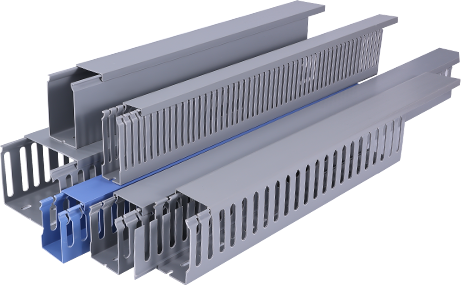
In modern industrial settings, the reliability and safety of machinery and equipment depend heavily on how internal electrical and communication cables are organized. Among all cable management solutions, wiring duct for machinery and equipment stands out as a fundamental yet often underappreciated component that directly impacts operational performance, maintenance efficiency, and workplace safety. Unlike generic cable management products designed for office or commercial construction, wiring ducts for industrial machinery are engineered to withstand harsh operating conditions, from extreme temperature fluctuations to constant vibration, chemical exposure, and heavy mechanical stress. Choosing the right wiring duct solution can prevent unplanned downtime, reduce maintenance costs, and extend the overall service life of industrial equipment, making it a critical investment for manufacturing facilities and industrial operations of all sizes.
First, it is important to understand the core functions that specialized wiring duct for machinery and equipment serves beyond basic cable organization. The primary role of wiring ducts in this context is to separate and protect power cables, signal wires, and control communication lines from each other, preventing electromagnetic interference that can disrupt sensitive control signals and cause inaccurate sensor readings or unexpected equipment shutdowns. In automated production lines, for example, even minor signal interference can lead to entire production batches being rejected, resulting in significant financial losses. Additionally, wiring ducts contain loose cables within a structured enclosure, preventing accidental contact with moving mechanical parts that could wear down cable insulation over time, leading to short circuits or electrical hazards. This organized arrangement also eliminates tripping hazards for maintenance technicians working around machinery, improving overall workplace safety compliance with OSHA and other global industrial safety standards.
Secondly, the material selection for wiring duct for machinery and equipment is tailored to the unique demands of industrial environments, and different materials offer distinct advantages for specific applications. The most common material is rigid polyvinyl chloride (PVC), which offers excellent electrical insulation properties, resistance to moisture and most common industrial chemicals, and a low cost that makes it ideal for general-purpose machinery applications. For operations involving high temperatures, such as metalworking equipment or industrial ovens, fiberglass-reinforced plastic (FRP) or thermoset wiring ducts are preferred, as they can maintain structural and insulating properties at temperatures up to 200 degrees Celsius without deforming or breaking down. For equipment exposed to frequent vibration, such as heavy mining machinery or portable industrial tools, flexible rubber or thermoplastic elastomer wiring ducts provide the necessary flexibility to absorb vibration while still protecting internal cables, preventing cable fatigue and failure over extended use. Stainless steel wiring ducts are also used in food and beverage processing or pharmaceutical manufacturing, where they meet strict hygiene standards and resist regular cleaning with harsh disinfectants.
Another key benefit of high-quality wiring duct for machinery and equipment is that it significantly reduces maintenance time and costs over the lifespan of the equipment. When cables are loosely routed through equipment enclosures without proper ducting, technicians often spend hours tracing and identifying individual wires when troubleshooting a fault, extending unplanned downtime from hours to even days in complex automated systems. Wiring ducts are designed with pre-marked slots or removable covers that allow technicians to quickly access, add, or replace individual cables without disrupting the entire cable network, cutting troubleshooting and repair time by up to 50% according to many industrial maintenance reports. This organized system also makes it easier for facility managers to track equipment upgrades and modifications, as new cables can be neatly added to existing ducts without creating a messy, unmanageable cable pile that increases the risk of future faults.
Furthermore, modern innovations in wiring duct design for machinery and equipment have adapted to the growing trend of modular and automated industrial systems. Many manufacturers now offer customizable wiring duct systems with adjustable lengths, snap-on covers, and modular connection fittings that allow equipment designers to adapt duct layouts to unique machine footprints, reducing design and assembly time during production. Some wiring ducts also integrate additional features, such as built-in cable clamps, adhesive backing for quick installation, or transparent covers that allow technicians to inspect cable conditions without opening the duct, further improving maintenance efficiency. As more industrial facilities adopt Internet of Things (IoT) sensors and smart monitoring devices in their machinery, wiring ducts also help organize the additional signal and data cables required for these systems, keeping them separated from high-voltage power cables to prevent signal interference that could compromise data accuracy.
In conclusion, wiring duct for machinery and equipment is far more than a simple organizational accessory; it is a critical component that supports the safety, reliability, and efficiency of industrial operations. By protecting cables from environmental damage, preventing electrical interference, simplifying maintenance, and adapting to modern industrial design needs, the right wiring duct solution delivers long-term value that far outweighs its initial cost. For equipment manufacturers and facility managers, prioritizing high-quality, application-appropriate wiring duct during design or equipment upgrade can reduce unplanned downtime, improve safety compliance, and extend the service life of valuable machinery, making it a wise investment for any industrial operation.